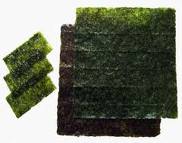
 Over the course of this past week as Japan has fought to keep it’s nuclear situation under control, we wondered what this potential catastrophe meant for us. Granted, outside of Japan, no one is facing any sort of life threatening danger. Nevertheless, with everyone’s mind on the impact of the release of radiation into the atmosphere, and much of the West coast contemplating what that could mean on U.S. soil, our thoughts turned to sea vegetables, also called seaweed.
While the U.S. government assured us that the radiation posed no threat, we couldn’t help but wonder. Doctors and nutritionists we talked to indicated that adding sea vegetables to our diets would not only help the body should the worst happen, but also provide a great deal of nutrition under normal circumstances. We were inspired to take these rarely used accents, and consider how we might integrate them into our daily meals. As neither of us was raised in cultures whose foods featured these lovely delicacies, it was to our imagination, and to our friends that we turned for guidance.
We’ve included some of the ideas and recipes we are using right now to help us get this nutritious food into our daily diets. We won’t lie, it isn’t always easy, and at times our families aren’t thrilled with seaweed and sea vegetable-based dishes, but their incredible properties cannot be overlooked!
There are many different kinds of seaweed and sea vegetables that are all great sources for vitamin-K and vitamin-B folate as well as a broad range of minerals such iron, potassium and magnesium, but above else, they have the highest content of natural iodine.
Following is a list of the most common sea vegetables and how to use them in your kitchen:
- Kombu/Kelp: great addition to soups, legumes and rice dishes. Flakes can be used instead of salt or as a seasoning directly on completed dishes.
- Wakame: good for soups, note it must be soaked in liquid before it is consumed.
- Dulse: can be used instead of table salt in your daily salad or salad dressing.
- Nori: often used for sushi rolls and can be bought in strips eaten along with brown rice.
- Arame: great addition to a garden fresh salad, note it must be soaked in liquid before it is consumed.
- Agar: can be used as a fantastic thickening agent for puddings instead of gelatin.
- Hijiki: great in vegetable and fish dishes; it is also called the “beauty vegetable” as it is given credit for the beautiful skin and healthy long hair of Japanese women, note it must be soaked in liquid before it is consumed.
One quick way we like to add sea vegetables to our diet is to make a simple cup of miso soup, which is very easy to make from scratch. Just follow the directions on the back of a container of fresh miso that you can find in the chilled section of most stores.
If miso is not your cup of tea (or soup), prepare seaweed sesame sprinkles ahead of time and serve with salads or over brown rice. Take a handful of dulse and toast it at 200F for about 15 minutes. Add it to a ¼ cup toasted sesame seeds and a ¼ teaspoon of rice; grind it all up in a spice or coffee grinder. The mixture will keep in the refrigerator for a few weeks.
Seaweed and sea-vegetables are serious business. Given the high content of iodine, iron and other minerals, start off slowly introducing them into your diet, and build up over time. And remember, these are new flavors for the palate; we’ve incorporated them and so far we love them. We hope you’ll join us in adding them in your line-up. Radiation plume or not, your body will thank you!
As a starter, try this New World Seaweed Salad.
Share this:


 Come and Cook with Us