If not This, then That! And a Turmeric Smoothie.

IMG_6850When it comes to food, it’s all about opportunity cost. The way I see it is that whether something we choose to eat or drink is good for us should not be viewed on an absolute basis but in relation to what we would have picked instead. So for example, eating non-organic berries is better than not eating berries at all. Also, drinking a freshly-pressed orange juice is not as good as eating an orange but better than drinking a fanta. One great example of this are smoothies which can be a great complement to breakfasts. Smoothies are generally a good idea but often packed with sugars and come in multiples of their serving sizes. On the other hand, many smoothies contain great ingredients like fresh fruits, organic diary, nut butters and spices. Take this week’s Turmeric Banana Smoothie. It looks great, it tastes great and is, once again, whipped up in no time. Let me know what you think.

We have written about turmeric and its benefits before. It is known to be a natural anti-inflammatory, a natural antibiotic and antiseptic, a blood purifier, a natural skin tonic, lowers cholesterol and helps stomach ulcers. To be precise, a lot of these benefits have only been shown in small-scale studies on humans or mice, but they are looking promising on many levels. And because our Western diet isn’t rich in many spices used in Eastern food, I’m a strong believer that adding foods containing turmeric (as well as cumin, saffron, curry, cardamom etc.) are beneficial to our bodies as they contain nutrients we usually don’t have access to. One thing I learned is that turmeric has a higher bioavailability when it is digested along with some freshly ground pepper, so always include a sprinkle of it when you use turmeric.

My Turmeric Banana Smoothie is a great way to add a pinch of health to your breakfast. Is it the perfect drink of all times? Probably not but it beats other options like a drinkable yogurt packed with sugars. And it tastes super delicious. Give it a try and let us know what you think! Come and cook with us!

Turmeric Banana Smoothie

IMG_6846IMG_6847IMG_6848

Cooking with the Seasons – Tuscan Tuna Salad

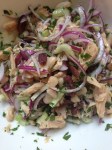
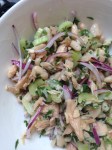
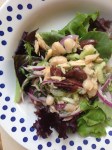
IMG_6734The longer I live in California, the more I appreciate the year-round accessibility to fresh produce. We are supposed to eat with the seasons and this leaves you with plenty of options if you can call this place your home. The one thing that doesn’t change, however, is that I cook with the seasons. Meaning that I follow my intuition on which warming or cooling foods my body craves depending on the environment around us. In the macrobiotic diet this is called the Yin (summer style) and Yan (winter style) of cooking styles. So now that the hot climate is around the corner, we welcome spring with a slew of fresh salads that keep us cool while still be filling and satisfying. My current favorite is this Tuscan Tuna and White Bean Salad inspired by the restaurant fish in Sausalito. Come and cook with us!

There is no one-size-fits-all when it comes to nutrition but I like to think that one can take ideas and inspiration from different sources. The belief that there are expansive and contractive foods and cooking styles is something that speaks to me. Don’t you agree that eating a hot comfort dish makes you feel warmer inside while you probably crave something more refreshing and light to cool you off when it is warm? Here are a few cooking style ideas based on Kristina Turner, author of The Self-Healing Cookbook, a macrobiotic primer for heating body, mind and moods with whole, natural foods. It was originally published in 1987 but to me her theories still hold true. She even included a chapter on why eating organic produce makes a difference. Talk about being ahead of the curve.

But back to seasonal cooking styles. In warm weather, Turner suggests the following:

  • Steam, quick-boil or make salads
  • Serve cool or at room temperature
  • Eat lighter-more upward growing foods
  • Choose soft, leafy greens
  • Use less salt
  • Enhance with vinegar, lemon, fresh ginger, parsley or other fresh herbs

When it comes to the colder winter months, Turner says this:

  • Slow-simmer, pressure cook, bake or sauté
  • Serve warm
  • Eat hearty – more compact veggies and downward growing roots
  • Choose sturdy, leafy greens
  • Add a little sea salt, miso, tamari or sauerkraut
  • Enhance with green onion, sea vegetables, ginger or dried herbs

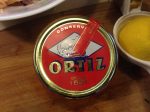
With this as a back-drop, there are plenty of easy, fresh and colorful salads that inspire me this time of year. To bridge this transitional period when days are hot and evenings are cold, I’d like to share a salad that is both refreshing but also hearty, and clearly not very macrobiotic: Tuscan Tuna and White Bean Salad. It’s crunchy in texture, decisive in flavor and made in a jiffy. And while it’s certainly not something I make all the time – being contentious about eating tuna – sometimes we just have to listen to our bodies and prepare what it is calling out for. Hope you like the salad as much as we do. Come and cook with us!

Tuscan Tuna and White Bean Salad

IMG_6727IMG_6729IMG_6732IMG_6737IMG_6734

April is Perfect for Ratatouille

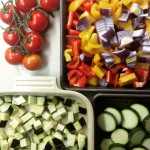
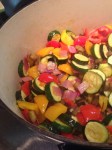
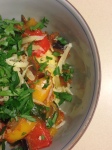
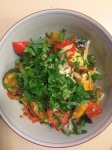
IMG_6592Back home we say: “Der April macht was er will” which means that “April does what it wants”. Given the agricultural background of my valley, this saying refers to the weather and the fact that it is highly unreliable during the month of April. I thought of this these past few weeks when my two boys spent more than one day at sailing regattas (or practices) rigging, de-rigging, sailing and bailing in miserable wet and cold conditions. Overall, they were troopers and I tried to have a hearty pot of comfort food waiting for them at home. In addition to goulash, chili con carne and pulled pork, I knew I would make them happy with a big pot of ratatouille. Have you made ratatouille before? This week you get a chance to try it, too. Come and cook with us!

Ratatouille is French and consists of a simple dish featuring zucchini, onions, peppers, eggplant and tomatoes either stewed on the stove-top or, my preference, first roasted in the oven and then combined and stirred with a nice dose of tomato paste to let the flavors meld. In fact, the word ratatouille is a blend of the French words ratouiller to disturb, shake and tatouiller to stir. It’s a hearty vegetarian dish that gets better over time and tastes just as good cold as it does warm. So make a lot, make it often and don’t be afraid of left-overs.

My kids favorite way to eat ratatouille is over soft polenta with either a poached egg or some tasty melted cheese layered in between, preferably gorgonzola dolce but any decent melting cheese will do.

In Italy, we have a similar dish called peperonata which comes from the word “peperone” which isn’t the “pepperoni” you put on your pizza but rather, bell peppers. It’s similar and often also features potatoes which are usually not in a ratatouille.

So next time you’re in the supermarket, stock up on zucchini (non-GMO), eggplants, bell peppers (organic as per EWG’s 2016 Dirty Dozen list which is hot off the press), onions and tomato paste and make a big pot of ratatouille. Hope you and yours like it as much as mine do! Come and cook with us!
Ratatouille

IMG_6589IMG_6591IMG_6590

Bake Me Some (Savory) Pies

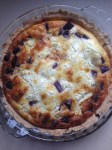
IMG_6515As much as I love pies, I wish I’d be baking them more often. They are easy, fast and beautiful and don’t always just mean dessert. In fact, this savory Purple Yam and Goat Cheese Pie is very easy to make, looks divine and tastes even better. And it’s great in a gluten free crust, too. Come and cook with us!

Baking pies isn’t as hard as one might think. We have written about basic pie crusts before and there are plenty of ready-to-mix options if you are experimenting with the glutenfree variety. The mix I use is Bob’s Red Mill Glutefree Pie Crust and includes a few different flours, starches as well as xanthan gum. I got it from my friend Michelle and am super pleased. The dough holds together, is just the right amount of flakey and also neutral in taste apart from the sweet flavor of baked butter. The directions for this gluten free mix – as for pie crusts in general – are straight forward and it yielded three pie crusts (you can always freeze a shell or two for later use). Key is to use cold butter, work fast and let the dough rest in the fridge before rolling it out. Trust me, getting your hands a little dirty with flour, butter and iced water feels great and how often do we get finger-deep into making our food these days. You can literally feel your accomplishment!

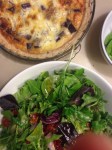
In fact, as my older son likes to say, pies are little more than sophisticated delivery devices for yummy fillings. And they do make every meal look a little more “put-together”. Over the years I’ve baked plenty of fruit and custard pies, but am increasingly intrigued by the savory kinds such as the Brie and Tomato Tart I shared before or this week’s Purple Yam and Goat Cheese Pie. The combination comes together beautifully and tastes great with a refreshing baby green leaf salad in a tangy dressing. Hope you give it a try. Come and cook with us!

Purple Yam and Goat Cheese Pie

IMG_6516IMG_6519IMG_6523