Care for some Carrots?

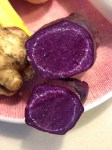
IMG_6261Did you know that carrots weren’t always orange? Well, at least it wasn’t their dominant color. As the story goes, back in the 17th century Dutch farmers selectively bread orange carrots to celebrate the Dutch Royal family who is also nicknamed “the Oranjes”. In fact, carrots used to be purple, white, brown and yellow before the orange ones took over. We have seen a comeback of these heirloom colored carrots and we like them. Here’s to a great recipe celebrating carrots, orange or otherwise. Come and cook with us!

Carrots are extremely good for you and despite years of overcooked, bland carrot sticks, they lend themselves to many flavorful dishes, including soups, salads, sides and baked goods. Carrots are packed with carotenoids, antioxidant compounds such as beta-carotene found in plants that are associated with a wide range of health benefits. Furthermore, carrots are a great source of lutein, zeaxanthin, two other carotenoids which together are beneficial for our eyes. Interesting to note, too, is that cooking carrots makes some of the nutrients more bioavailable, meaning that your body can better absorb them. And because beta-carotene is a precursor to vitamin A, it’s best to eat carrots with a little fat, such as this delicious dressing I made for our roasted carrots.

There are so many great dishes that can be made with carrots. Keep in mind that they share the same botanical family as parsnips, fennel and parsley, making them all good partners in dishes in the kitchen. Some of our favorite recipes include Beet and Carrot Salad with Fresh Mint, Carrot, Orange Ginger Soup, Carrot Apple Soup and Carrots, Olives and Garlic, to name just a few!

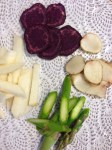
Whether using the heirloom kind or the more common orange variety, this Roasted Carrot Salad with Dijon Dressing is delicious and can easily be expanded by adding red and golden beets as well as bulb of red onions to the mix. Hope you enjoy it as much as we did. We could have devoured three times the amount I made. Come and cook with us!

Roasted Carrot Salad with Dijon Dressing

IMG_6261IMG_6266IMG_6268IMG_6271

Superb Herbs

IMG_6212Looking out the window in Northern California, one wouldn’t know that spring is around the corner. That’s not to say that it isn’t the right time to add more fresh herbs to your dishes. Whether parsley, mint, basil, chives, dill, cilantro or mint, there are so many ways fresh herbs can be used to add some punch to a fresh green salad, perk up a soup or add more flavor to vegetables, meats and fish dishes. Make them a staple in your kitchen, too. Come and cook with us!

Whether you grow them in your garden, or buy them regularly at the farmers market or grocery store, fresh herbs can be a powerful addition to anything you cook and they are also packed with lots of antioxidants such as vitamin C and vitamin K. I usually have Italian parsley, cilantro, chives, mint and my favorite tarragon at hand and while they do require that extra step in washing, prepping and cutting, the little additional work goes a long way in making your food fresher, tastier and more flavorful.

Here is a list of herby hints to make sure that the herbs you buy will last longer:

  • Use a sharp knife, scissors or tear by hand to avoid bruising herbs when cutting them up.
  • Delicate spring herbs should be added at the end of cooking, or sprinkled over a finished dish to maintain optimum color and flavor. Interestingly, some of the nutrients are increased or decreased in their capacity due to heat. For example, parsley should be added during the last few minutes of cooking.
  • Delicate fresh herbs wilt quickly if not properly stored. Wash them in cold water to remove any dirt and remove any wilted leaves. Stand them upright in a jar filled with an inch or two of water, cover the top of the jar with a perforated plastic bag and store in the fridge.
  • For more sturdy fresh herbs, lay them on a damp paper towel, gently roll up and store in a ziplock bag in the fridge.
  • Some herbs, such as parsley, tarragon and mint, can be dried to preserve them. Hang small bunches of herbs upside down in a warm, dry, well-ventilated place. Chopped chives can be preserved simply by freezing them but chervil and dill are nut suitable for drying as they will lose their flavor.
  • One thing to note is that while it’s best to pluck off parsley and basil leaves off their stems, cilantro stems taste just like the leaves, so you can include the more tender ones.

Of all the herbs, parsley and chives are probably the most versatile ones while thyme and rosemary easily overwhelm a dish and cilantro is the most contentious: you either love it or you don’t. This week’s recipe is a fresh salad made of herbs. It’s quite strong, so go easy on the dressing and be creative if one or the other herbs we chose is not to your liking. Wherever your taste buds take you herbwise, let them inspire you to bring some spring into your dishes! Come and cook with us!

Fresh Spring Herb Salad with Preserved Lemons

What’s a Prebiotic?

IMG_6125One of the many reasons I like my yoga practice is that I find myself surrounded by like-minded people. The other day after class, I overheard a group of fellow yogini talk about sauerkraut, homemade kefir and PRE vs. PRObiotics. What exactly are prebiotics, I asked. Well, let me share what I learned! Come and cook with us!

The concept of prebiotics is straight forward and simple. Once we eat foods that are packed with good bacteria – a.k.a. probiotics, we have to make sure that there is plenty of nourishing food for those good bacteria to thrive on. And that food comes in the form of dietary fiber, specifically the soluble kind. While a balanced diet high in vegetables, good fats, complex carbs and the right kind of protein sounds right, most of the foods get broken down by our strong stomach acids and never make it intact past the small intestine. Prebiotics, though, are known to resist digestion in the stomach and small intestine and reach the colon – or large intestine – where they are consumed and fermented by the good gut microflora. And if this is not convincing, studies have suggested that prebiotic intake may reduce prevalence and duration of diarrhea, reduce inflammation, help prevent colon cancer, enhance bioavailablity of minerals including calcium, magnesium and iron, lower some risk factors for cardiovascular disease and promote satiety and weight loss.

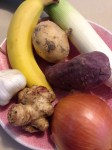
So how do we get these fibers into our diet? If we all ate the recommended amounts of fruits and vegetables per day, we would consume plenty of the good stuff that feeds our benevolent gut bacteria. Unfortunately, many of us don’t. But here’s a list of foods that you can add to your diet to increase your intake of prebiotics. Most of these foods are best consumed raw if you’d like to get the most prebiotic benefit, but if you can’t get excited about that, cook them as you will still get plenty of the good stuff. Bet you will look at them differently next time you’re grocery shopping:

  • Raw chicory root
  • Raw jerusalem artichokes
  • Raw dandelion greens
  • Raw garlic
  • Raw or cooked onions
  • Raw leek
  • Raw asparagus
  • Raw banana
  • Raw root vegetables such as sweet potatoes and jicama

You can snack on raw Jerusalem artichokes and jicama as well as incorporate raw onions, leeks and garlic into your salads. They’re tasty, crunchy and colorful and provide for a great alternative to the usual snack stand-ins like bars, chips or a cookie. And best of all, they make sure that all that good work you do with eating plenty of good foods is actually supported by making the environment in your gut even friendlier. Go on, include more prebiotics in your diet. Come and cook with us!

IMG_6126IMG_6127IMG_6128IMG_6129IMG_6131

How About Them Blood Oranges?

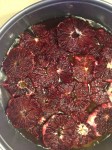
IMG_5738This time of year its hard not to get excited about blood oranges. They take me straight back to my childhood, when blood oranges were a regular feature in the cold winter months. Whether Moro or Tarocco, there is something about the color of blood oranges that appeals to me. I felt a little like eating something that is forbidden. To this day, I still think they are special, as is this Upside-Down Polenta Blood Orange Cake that is easy enough to make, tastes delicious and looks absolutely fabulous. Let’s have some blood oranges this winter. Come and cook with us!

Moros are best for juicing and Tarocco the most popular to eat in Italy. Then there are Sanguinelli which hail all the way from Spain and are considered the sweetest. Unfortunately, the range of blood oranges offered in stores here in the US is often more limited, so I take what I can get. And while I eat most of my oranges peeled and raw in segments as a snack or after dinner dessert, I often integrate them into my salads or press and juice them. Generally speaking, given that most pesticides are concentrated in the peel, I buy organic and wash them well if I am including the peel in my recipe.

As you know, I don’t often bake and almost never not gluten-free, but I’ve come across so many versions of this recipe lately that I just had to give it a try. This particular concoction is inspired by one from Bon Appétit, which is probably my favorite food magazine with a knack for matching delicious recipes with great pictures and witty social media postings. The cake itself is easy to make and fun to assemble. Who doesn’t like the thrill of an upside-down cake?

If you like the sound of any of this, hurry, as blood oranges are only in season from November through the end of February. Come and cook with us!

Upside-Down Polenta Blood Orange Cake

IMG_5708

Show Your Love with Strawberries

IMG_5664In case you missed it, Valentine’s day is upon us. Sure, there are lovely cards, fragrant roses and red knickers but what better way to celebrate your loved ones than with a platter of chocolate covered strawberries. They are what I call big-bang-for-the-buck desserts as they are easily prepared and go a long way in making a big impression. So come on, show your love with some Chocolate Covered Strawberries this Valentine’s. Come and cook with us!

First off, let me say that buying strawberries in February isn’t exactly intuitive unless you live in California where they seem to be growing year-round. And if at all possible, I buy the organic versions as per EWG’s Dirty Dozen Shopping list. My loved ones are partial to dark chocolate, but you can also do milk chocolate if that is what you and yours prefer.

The recipe itself is very easy and done in three simple stages: wash and let strawberries dry, heat chocolate and dip strawberries, let cool and decorate. That’s not too complicated, is it? There is only one thing you have to be careful about: make sure that no water droplets mix in with the melting chocolate or it will seize and change the consistency of your chocolate cover. Still yummy, but more like a ganache than a hard shell. And if you run out of strawberries, take some firm blueberries and dip them, too, for a fun little diversion from the more classic Valentine’s treat.

Take a look at the pictures below. They pretty much explain the whole process. Hope you feel inspired to shower your loved ones with a selection of chocolate covered strawberries this Valentine’s. Be loved! Come and cook with us!

Chocolate Covered Strawberries

IMG_5628IMG_5629IMG_5630IMG_5648IMG_5656IMG_5660IMG_5677