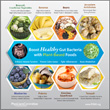
Seven Foods to Supercharge Your Gut Bacteria (Review by M. McCarty)

gut-bacteriaThose of you who have been with me for a while know that I am a big fan of Meredith McCarty, a Diet Counselor and Nutrition Educator, a macrobiotic counselor and a vegan (dairy-free vegetarian) cooking instructor. She has her own website and I wanted to share with you her most recent e-newsletter. Meredith has written several cook books, offers group and personalized nutrition and cooking classes and is an inspiration whether you eat macrobiotic food or not. Here is her book review of “Seven Foods to Supercharge Your Gut Bacteria” by Meghan Jardine, which identifies broccoli, bananas, beans, Jerusalem artichokes, blueberries, polenta, kimchie (sauerkraut) and tempeh as being the seven plant-based foods that promote a healthy gut bacteria which enhances immune function, prevent colon cancer, fight inflammation and boost metabolism. Perfect summer reading for the beach! Come and cook with us!

Healthy Gut Bacteria Diet

“Did you know we are only 10% human? 90% of our cells are nonhuman, microbial cells. Since our diet influences our microbes, it’s true: We really are what we eat. The good news is that you can cultivate a new microbiota, formerly known as gut flora, in just 24 hours—by changing what you eat. Bacteria that live in our intestinal tract flourish off of colorful, plant-based foods.”

Healthy intestinal bacteria help “our bodies digest and absorb nutrients, synthesize certain vitamins, and rally against intruders, such as influenza and toxic cancer-forming carcinogens. In addition to boosting our immune system, microbiota sends messages to our brain and helps regulate metabolism. Over time, microbiota forms colonies to combat obesity, type 2 diabetes, heart disease, autoimmune disease, and even certain forms of cancer.

“The bottom line: The more diversity you have in your gut bacteria, the better off you’ll fare in the long run.” Here are three foods to focus on:

Fermented plant-based foods such as sauerkraut, kimchi, tempeh, soy sauce/tamari/miso (and I would add whole-grain sourdough bread):

These foods “directly inoculate your gut with healthy live micro-organisms that will crowd out the unhealthy bacteria, improve the absorption of minerals, and improve overall health. They are probiotics that have been found to improve the health of the intestinal cells, improve immune function, decrease allergies, reduce the risk of colon cancer, and treat diarrhea.”

Broccoli and other cruciferous vegetables such as kale, cabbage and cauliflower:

“Cruciferous vegetables contain sulfur-containing metabolites, known as glucosinolates, which are broken down by microbes to release substances that reduce inflammation and reduce the risk of bladder, breast, colon, liver, lung, and stomach cancer…Studies show people who eat the most leafy greens reduce their risk of colorectal cancer by 18%.”

Beans

“Any legume will help release short-chain fatty acids (SCFA) that strengthen your intestine cells, improve absorption of micronutrients, and help with weight loss. Beans feed good gut bacteria, which in turn revs up your immune system. Calorie for calorie, beans offer the most nutrition bang for your buck. They are packed with fiber, protein, folate, and B vitamins, which play a role in regulating a healthy gut and a healthy brain. Researchers from Toronto just published a study in the journal Obesity that finds beans (pulses) improve weight loss by enhancing satiety.”

The four other foods that enhance a healthy gut bacteria are: polenta, blueberries, bananas and Jerusalem artichokes.

Source: “Seven Foods to Supercharge Your Gut Bacteria” by Meghan Jardine, MS, MBA, RD, LD, CDE, and associate director of diabetes nutrition education at Physicians Committee for Responsible Medicine, a nonprofit organization dedicated to promoting effective medical practice, higher standards in research, and preventive nutrition,  www.pcrm.org

Happy July 4th

IMG_6514Happy Independence Day from all of us to all of you. May your day be filled with happiness, joy, and, as always, good food! Remember that good food does not have to be fancy, sophisticated or expensive. It can be simple, unpretentious and definitely tastes better when eaten in good company. This summer is dedicated to friends and family. So if you get a chance, grab yours and enjoy a happy meal together! And know that we’re always here with a BIG archive of beloved dishes that take advantage of the seasonal produce bounty so browse through our pages on the blogFacebookTwitter or Instagram to get some ideas!

Take care,

Kathrin

10 Golden Rules of Successful Aging

IMG_0530I recently read an article about the 10 golden rules of successful aging. Here’s a summary for you to get you thinking. I’m particularly fond of points 1, 3, 8 and 10. What about you? Come and cook with us!

Genes account for only about 25% of our health and longevity; the rest is influenced by where and how we live. These are two factors that we can control, starting now. The following rules for healthy living will help us achieve better health:

1. Eat well
2. Maintain a healthy weight
3. Stay physically active
4. Get quality sleep
5. Wear sunscreen
6. Collaborate with a good primary care doctor regularly
7. Find your passion
8. Connect with others
9. Stop complaining – change what you can and accept what you cannot
10. Stay curious

Hail to the Kale Caesar

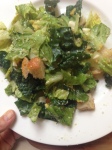
IMG_7367My son has been insisting I make kale Caesar salad and while loving Ceasar in a restaurant, I haven’t made it before, partly because I wasn’t sure how to deal with the raw eggs. Boy, am I glad he made me look into it as I discovered this delicious, easy-to-make romaine caesar salad which has become an instant classic in our house. Come and cook with us!
While kale is no longer the only superfood that is around, it is still a remarkable food packed with vitamin K, A and C and containing an indirect antioxidant glucosinolates which can reduce levels of harmful estrogens that may promote cancer growth in hormone-sensitive cells. In addition, the romaine lettuce delivers the eye-healthy antioxidant carotenoids beta-carotene, lutein and zeaxanthin which studies have linked to reduced risk of cataracts and age-related macular degeneration. And they are both high in insoluble fiber, which 96% of Americans don’t get enough and could use much more of. In fact, in a French study of 6000 individuals, those with the highest intake of insoluble fiber had lower blood pressure, cholesterol, triglycerides and homocysteine levels. So bring on the Romaine Kale Caesar salad!
The salad mixes romaine and kale which doubles up the nutrition and crispiness of the dish. Instead of using mayo, the dressing uses the ingredients of it but the egg is cooked which can be reassuring for those of us trying to avoid the risks associated with consuming raw eggs. You can go lighter on the anchovies, although I think they provide a depth of flavor that is unmistakably Caesar.
So, if you are like my son and love Caesar salads, give this salad a try and let us know what you think. Come and cook with us!

Learn from the French How to Make Onion Soup

IMG_7110Our society has redefined the way we procure our food. Even if we cook from scratch, few of us have the time, space and skill-set necessary to grow our own produce. I see it as an unfortunate side effect of globalization with my friends and family back home in South Tyrol all still have a garden to rely on. For now, at least. Even my 101-year-old grandmother grows some lettuce, peas, onions and chamomile flowers in a tiny but very productive little patch of garden right in the middle of town. Same for my parents who don’t set foot in a fruit and vegetable store all summer or at least until their supply lasts. Luckily for those of us less active in the gardening department, there is plenty of inspiration to be found to help people find their way back into old-fashioned and proven gardening methods. One such effort stems from our friends across the pond resulting in a beautifully written and illustrated book by renowned chef Raymond Blanc who partnered with London’s spectacular Kew Gardens to publish Kew on a Plate. Let’s see what this book is all about! Come and cook with us!

If it wasn’t for David, my friend, neighbor and fellow European (at least until Brexit is decided), I wouldn’t have discovered this book which is currently out of stock in the US. For those not familiar with Raymond Blanc, he is a renowned French chef whose restaurant holds 2 Michelin Stars. He is also a successful author and has presented several BBC series. To give you a hint on why both David and I appreciate Raymond’s approach to cooking, the best dish on his menu, according to himself, is the ‘one that’s in season’. You can see why having access to Kew Gardens turned him into a kid in a candy store. Furthermore, he worked with the garden staff to grow exactly those varieties of produce that yield the highest flavor. And he knows a thing or two about that topic!

In his book, the restaurateur selects a variety of specific fruits and vegetables from carrots to potatoes, rhubarb and gooseberries, apples and peas, and offers tips and expertise in growing the produce, adding flavor notes as well as sharing about 40 mouth-watering recipes including a tasty chicory gratin and a gorgeous spring pea risotto that makes my mouth water.

Many of the featured dishes are not just super delicious, they look particularly delectable. I’ve chosen this classic mid-week French Onion Soup to showcast how simple ingredients come together beautifully when prepared the right way. And who is better to offer advice on that than Raymond Blanc! Give it a try and let me know what you think. Come and cook with is!

Classic French Onion Soup

IMG_7098IMG_7102IMG_7104IMG_7107IMG_7106-1