 What do teff, sorghum and buckwheat have in common? They are all non-wheat flours that along with whole and ancient grains, coconut flour and nut flours can be used to make delicious baked goods. And who better to teach us how to make the most of these flavor flours than Alice Medrich, a James Beard award-winning author who has won more cookbook-of-the-year awards and best in the dessert and baking category awards than any other author. Her newest book, Flavor Flours, is a great addition to anyone interested in upping their game in non-wheat baking. Come and cook with us!
Jessica gave me this book and I’ve been so thankful for it. Actually, my boys have been even more thrilled about it being so prolifically tested. When I initially leafed through the pages, I couldn’t stop visualizing all these wonderful creations. I have been baking with different flours – my GF sourdough is based on a variety of different whole grains, flours, starches and seeds – but in this book Mendrich succeeds in taking the specific characteristic of each flour to its advantage and making it a recipe’s “hero ingredient” instead of a wheat replacement.
It’s hard to pick a favorite flavor flour. I love teff and you all know about my infatuation with buckwheat. What I love about this book is that it gives detailed insights on how different flours react in recipes depending on how finely they have been milled and how they are being processed. It’s an intriguing book if you’d like to learn more about baking with non-wheat alternatives.
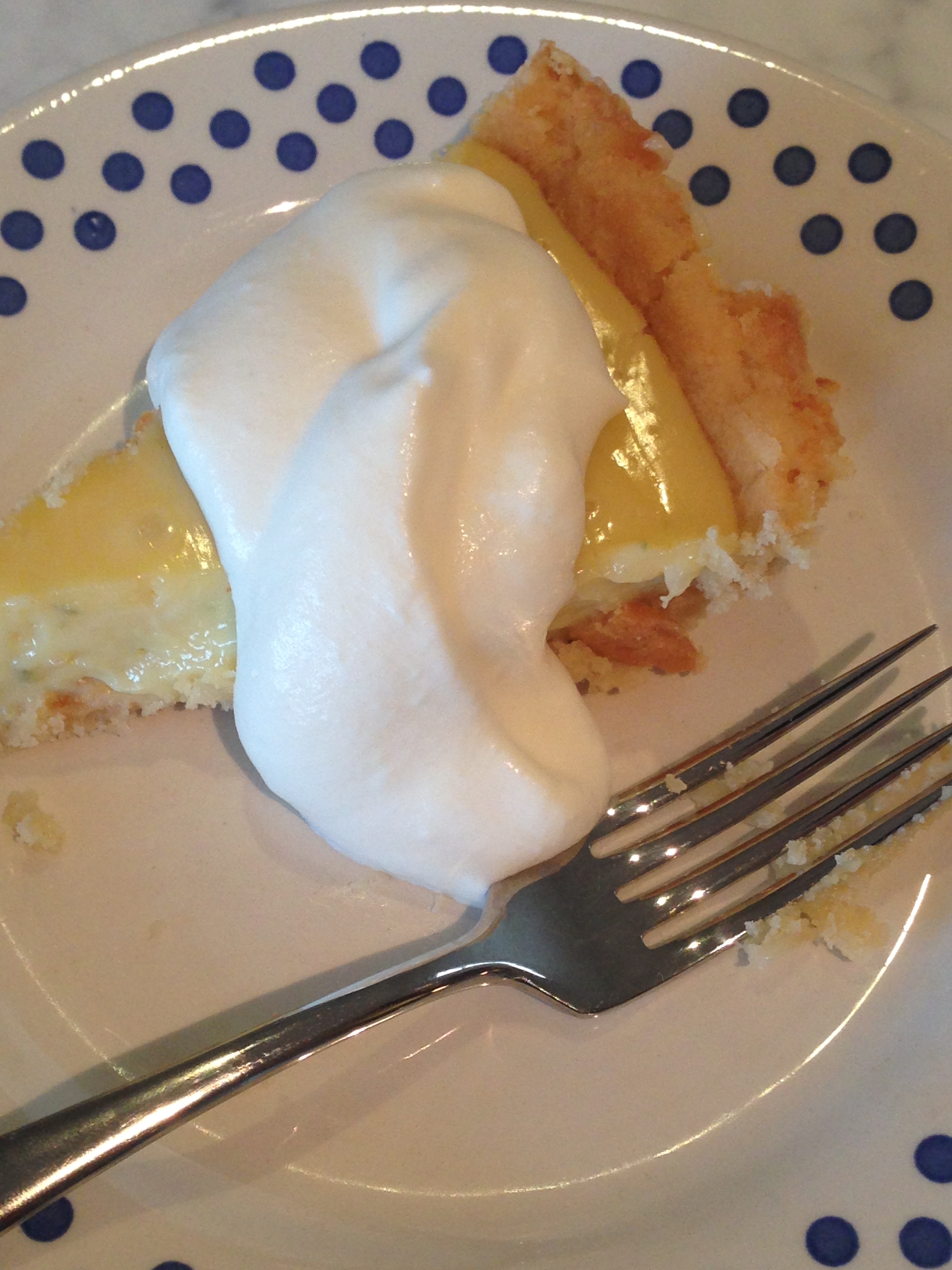
So far, we have baked delectable Bittersweet Teff Brownies, moist Dark and Spicy Pumpkin Loafs with buckwheat and a glorious Coconut Key Lime Tart. But there is so much more. There are Buckwheat Linzer Cookies, Simple Scones, Lemon Cream Roulade, Panforte Nero and Walnut and Buckwheat Crackers. And there are plenty of sponge, chiffon and layer cakes. For now, let’s start things simply with Medrich’s satisfying Banana Muffins with sorghum. Come and cook with us!

 Come and Cook with Us