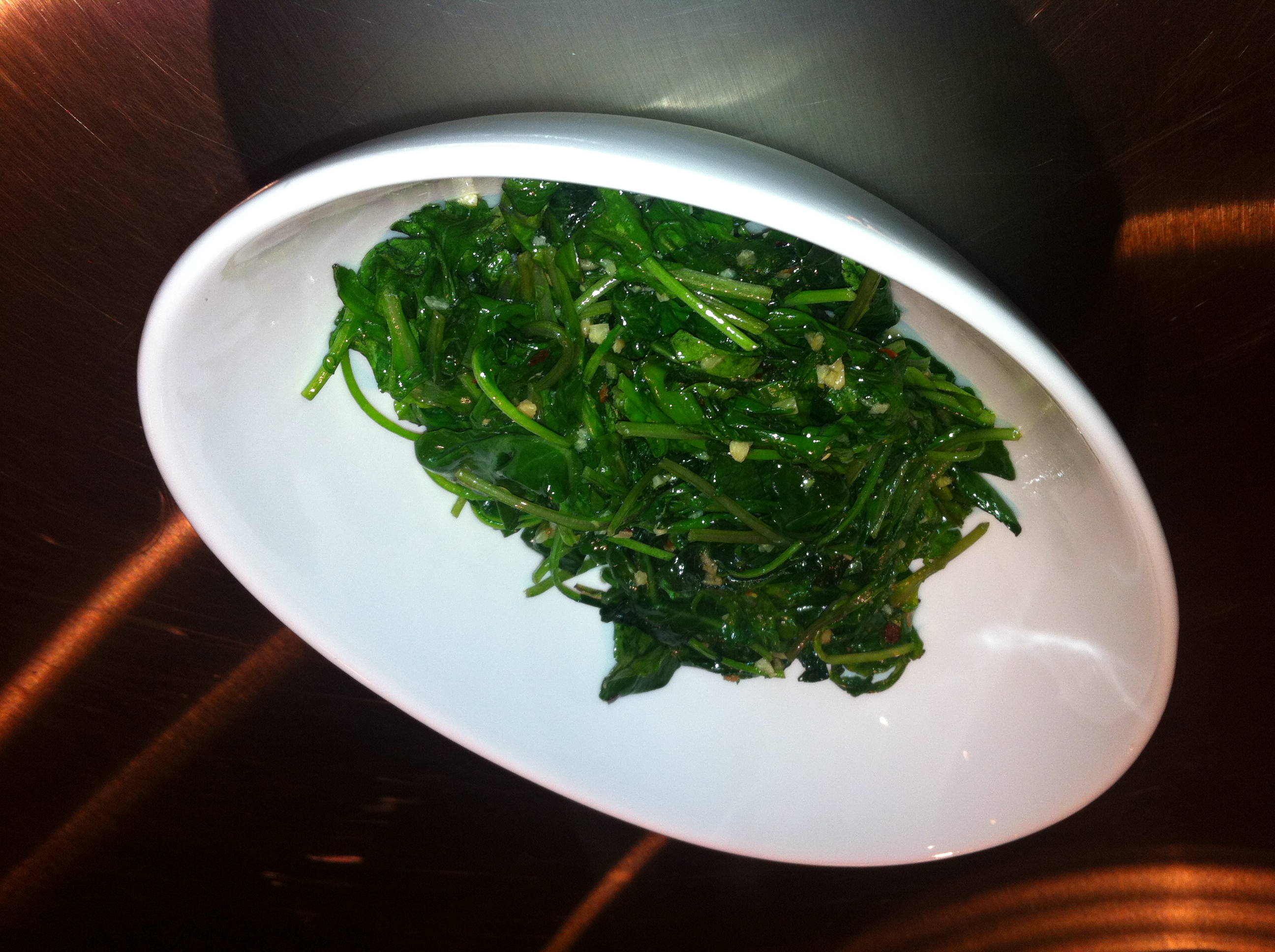
 Up until recently kale was not a favorite vegetable of mine. I’d walk by it in Whole Foods see its 1000-point ANDI score and cringe. 1000 points is high for just about anything, but for an ANDI score that means that kale (along with collard greens) is the healthiest item Whole Foods has to sell. Period. I didn’t like kale because it didn’t taste good. It was fibrous and hard to chew. And I didn’t really know how to cook it so I never wanted to prepare it; until, that is, I stumbled upon a few recipes that not only made kale edible, but also made it a feature vegetable in my home. So today’s post is dedicated to the only vegetable I now make at least once a week every week of the year. Kale.
Kale is a member of the Brassica family of crucifers and cabbages. It is a top source for vitamin K, a vitamin that is beneficial to the blood, bones and arteries. Kale is high in vitamins A and C, as well as cancer protecting glucosinolates, and eye-supporting carotenoids such as beta-carotene, lutein and zeaxanthin. Kale is available year round, but best in the cold months, which makes it a great winter vegetable.
There are several basic ways that I serve kale: as kale chips, in a smoothie, as a juice, and sautéed with garlic. Instructions for how to prep kale in these ways are included below. But my absolute favorite way to serve kale is as Tuscan kale salad. This is a dish I first tried at Il Buco, a restaurant in New York City, and then dreamed about for days. I finally found a preparation that is so good that dinner guests regularly call me the next day looking for the recipe. Try it and let us know what you think. Come and cook with us!
Tuscan Kale Salad
All Things Kale

 Come and Cook with Us